

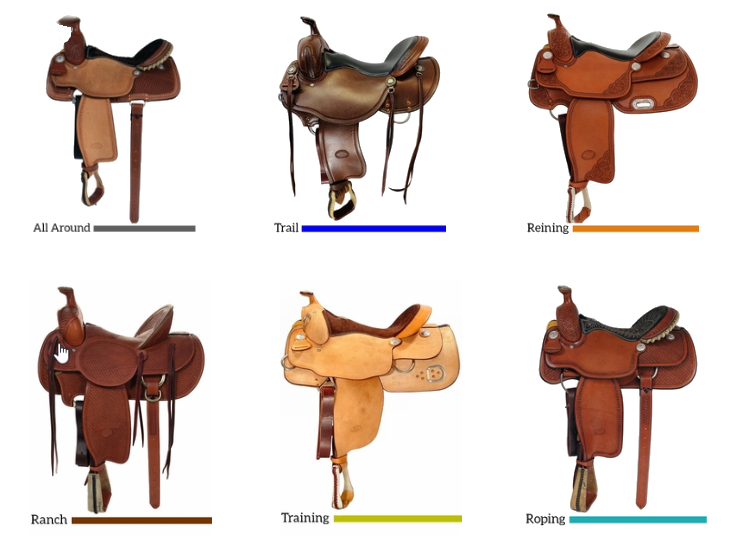
Whether you’re working cattle, riding trails, competing in rodeo events, or simply enjoying time in the saddle, selecting the right equipment is essential for both comfort and performance. Learning about the types of western saddles helps riders choose a saddle designed for their discipline, riding style, and horse. Since every saddle serves a different purpose, understanding their features makes it easier to find one that supports both rider and horse during every ride.
Why Western Saddles Vary by Discipline
Western riding includes a wide range of activities, from ranch work and barrel racing to trail riding and horse shows. Because each discipline places different demands on horse and rider, western saddles are built with unique seat designs, horn styles, cantle heights, and rigging systems.
Rather than searching for a one-size-fits-all option, riders benefit from choosing a saddle that matches their primary activity while providing proper fit and comfort. A well-designed saddle improves balance, distributes weight evenly across the horse’s back, and allows the rider to maintain better control throughout the ride.
All-Around Saddles
An all-around saddle is one of the most versatile choices available. It combines features from several specialized saddles, making it suitable for riders who enjoy multiple disciplines.
These saddles work well for:
- Recreational riding
- Ranch work
- Local competitions
- Pleasure riding
- General training
For beginners or riders who don’t specialize in a single event, an all-around saddle offers flexibility without sacrificing comfort.
Trail Saddles
Trail saddles are designed for long hours in the saddle. Comfort becomes the top priority, both for the rider and the horse.
Common features include:
- Lightweight construction
- Comfortable seat
- Multiple attachment rings for gear
- Shorter skirts for improved mobility
- Secure riding position
These saddles are ideal for riders who spend extended time exploring trails or participating in endurance-style rides.
Barrel Racing Saddles
Speed events require a completely different saddle design.
Barrel saddles are typically lighter than traditional western saddles and feature a deep seat with a higher cantle to help riders stay secure while making sharp turns around barrels. Their compact design allows horses to move quickly while giving riders greater control during rapid acceleration and direction changes.
Roping Saddles
Roping saddles are built for strength and durability.
Unlike lighter performance saddles, they feature reinforced trees and sturdy horns capable of handling the stress created when roping livestock. The lower cantle allows riders to dismount quickly, while heavy-duty rigging provides additional stability.
These saddles are commonly used by ranchers and competitors involved in team roping or calf roping events.
Ranch Saddles
For working ranches, durability is essential.
Ranch saddles are designed to handle long days of riding while supporting demanding tasks such as herding cattle, checking fences, and moving livestock. Their rugged construction often includes saddle strings for carrying equipment, reinforced rigging, and comfortable seating for extended use.
Although heavier than some specialty saddles, ranch saddles are valued for their reliability in everyday working conditions.
Show Saddles
Western show saddles combine function with appearance.
These saddles often feature decorative silver accents, detailed tooling, and polished finishes that stand out in competition. While appearance plays an important role, show saddles are also designed to position riders correctly during western pleasure and equitation classes.
They are commonly reserved for competitions rather than everyday riding because of their craftsmanship and decorative features.
Reining and Cutting Saddles
Both reining and cutting events require quick, precise communication between horse and rider.
Reining saddles allow riders greater freedom of movement during spins, sliding stops, and lead changes. Cutting saddles feature flatter seats and specialized designs that help riders stay balanced while horses make sudden lateral movements when working cattle.
Although similar in appearance, each saddle is engineered specifically for its discipline.
Choosing the Right Saddle
Selecting a western saddle involves more than choosing a riding discipline.
Riders should also consider:
- Proper saddle fit
- Horse conformation
- Seat size
- Rider experience
- Weight
- Intended use
- Material quality
A saddle that fits both horse and rider comfortably reduces pressure points, improves communication, and contributes to a more enjoyable riding experience. Many experienced riders recommend working with knowledgeable saddle professionals before making a purchase, especially for horses with unique conformations.
Conclusion
Understanding the different types of western saddles helps riders make informed decisions based on their riding goals rather than appearance alone. Whether you prefer trail riding, ranch work, barrel racing, reining, or western competition, choosing the right saddle can improve comfort, performance, and confidence for both horse and rider. Investing time in learning the purpose of each saddle style is one of the best ways to support safe and enjoyable riding for years to come.
To explore western riding tips, saddle education, and helpful equestrian resources, visit Saddle Up Colorado. Their educational content helps riders better understand saddle selection, horse care, and western riding practices so they can make informed decisions both in and out of the saddle.
