

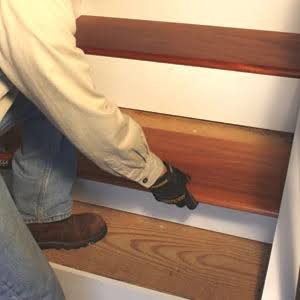
How Prefinished Hardwood Stair Treads Support Faster, Cleaner Remodels
Staircase renovations can become one of the most time-consuming parts of a flooring or remodeling project. Contractors must coordinate measurements, material selection, installation, staining, drying, and final inspection – often while working around homeowners or other trades. Choosing prefinished hardwood stair treads can reduce several of these steps while giving flooring professionals greater control over the final appearance.
What Are Prefinished Hardwood Stair Treads?
Prefinished hardwood stair treads arrive at the jobsite with the stain and protective topcoat already applied. Unlike unfinished components, they do not require contractors to sand, stain, and seal each tread after installation.
These products are available in various wood species, colors, profiles, and dimensions. This makes them suitable for remodeling projects, new home construction, flooring replacements, and staircase upgrades.
For flooring dealers, they can serve as a natural addition to hardwood flooring sales. For contractors and installers, they provide a practical way to complete stair work with fewer on-site finishing stages.
Less On-Site Finishing Work
Traditional stair installation can involve multiple finishing visits. After installing unfinished treads, the contractor may need to sand the surface, apply stain, allow it to dry, add a protective coating, and wait again before the staircase can handle normal foot traffic.
Prefinished treads remove much of this work. Once measurements and installation are completed correctly, the stairs are closer to being ready for use.
This can be particularly helpful when a remodeling schedule is tight. Homeowners may need access to upper floors, while builders may have painters, trim carpenters, electricians, or other crews working in the same property. Reducing drying time can make scheduling easier for everyone involved.
More Consistent Color and Finish
Applying stain by hand at a jobsite can produce color variations. Wood absorbs stain differently depending on grain patterns, sanding, temperature, humidity, and application technique.
Factory-applied finishes provide greater consistency across the order. Although natural hardwood will always show some grain and tonal variation, controlled finishing conditions help create a more uniform overall appearance.
This is valuable when a staircase is a major visual feature. Architects, designers, and custom homebuilders often use stairs to connect flooring materials across multiple levels. A consistent finish helps the staircase feel like an intentional part of the interior rather than a separate construction element.
A Cleaner Jobsite
On-site sanding creates dust that can spread beyond the staircase area. Staining and coating also introduce odors and require careful handling to prevent marks on walls, trim, and nearby flooring.
Using prefinished stair components reduces the amount of sanding and liquid finishing material required at the property. This helps contractors maintain a cleaner work area and lowers the chance of dust settling on freshly painted or installed surfaces.
The cleaner process can be especially useful for occupied homes. Families may remain in the property during a renovation, making dust control and access important concerns.
Better Coordination With Hardwood Flooring
A staircase often connects two floors that contain hardwood, engineered wood, or other premium surfaces. If its color, sheen, or wood character differs noticeably from the surrounding flooring, the transition may look unfinished.
Flooring dealers and contractors should consider the full room when helping customers choose stair materials. Important details include:
- Wood species and grain pattern
- Stain family and undertone
- Surface sheen
- Tread thickness and depth
- Existing riser and skirt-board colors
- Flooring direction near the staircase
- Handrail, baluster, and newel-post finishes
An exact match may not always be possible, particularly when working with aged flooring. In those cases, a coordinated color can look more deliberate than a near match that is visibly different.
What to Check Before Ordering
Accurate measurements are essential. Installers should confirm the width and depth of every step rather than assume the staircase is perfectly uniform. Older homes may have slight variations caused by framing, previous repairs, or settling.
Professionals should also determine whether the project requires full replacement treads or retrofit treads designed to cover existing stairs. The condition of the underlying staircase, required nosing profile, local building rules, and finished riser height can all affect the correct choice.
Samples are helpful when color accuracy matters. Viewing a sample in the property allows the contractor, designer, and homeowner to examine it under natural and artificial lighting before placing the full order.
A Practical Addition for Flooring Professionals
Prefinished hardwood stair products allow flooring retailers to address more of the customer’s project under one order. A buyer replacing hardwood flooring may also need matching or coordinating stair components, making it helpful to discuss the staircase during the initial material consultation.
Contractors can benefit from fewer finishing stages, reduced jobsite disruption, and more predictable scheduling. Designers and builders gain greater control over the relationship between the staircase, flooring, trim, and surrounding architecture.
For professionally finished stair materials made for flooring dealers, contractors, installers, builders, and designers, visit Wood Stair Co to explore available options and find the right components for your next staircase project.
